Top pair with a strong kicker looks comfortable heads-up. Add a third player, a wet board and a shallow effective stack, and the same hand can become expensive very quickly.
This breakdown uses one realistic live-tournament hand to show how a flop bet does more than collect value. It also chooses the size of the turn pot—and can quietly commit you before you have decided whether one pair deserves your stack.
The hand
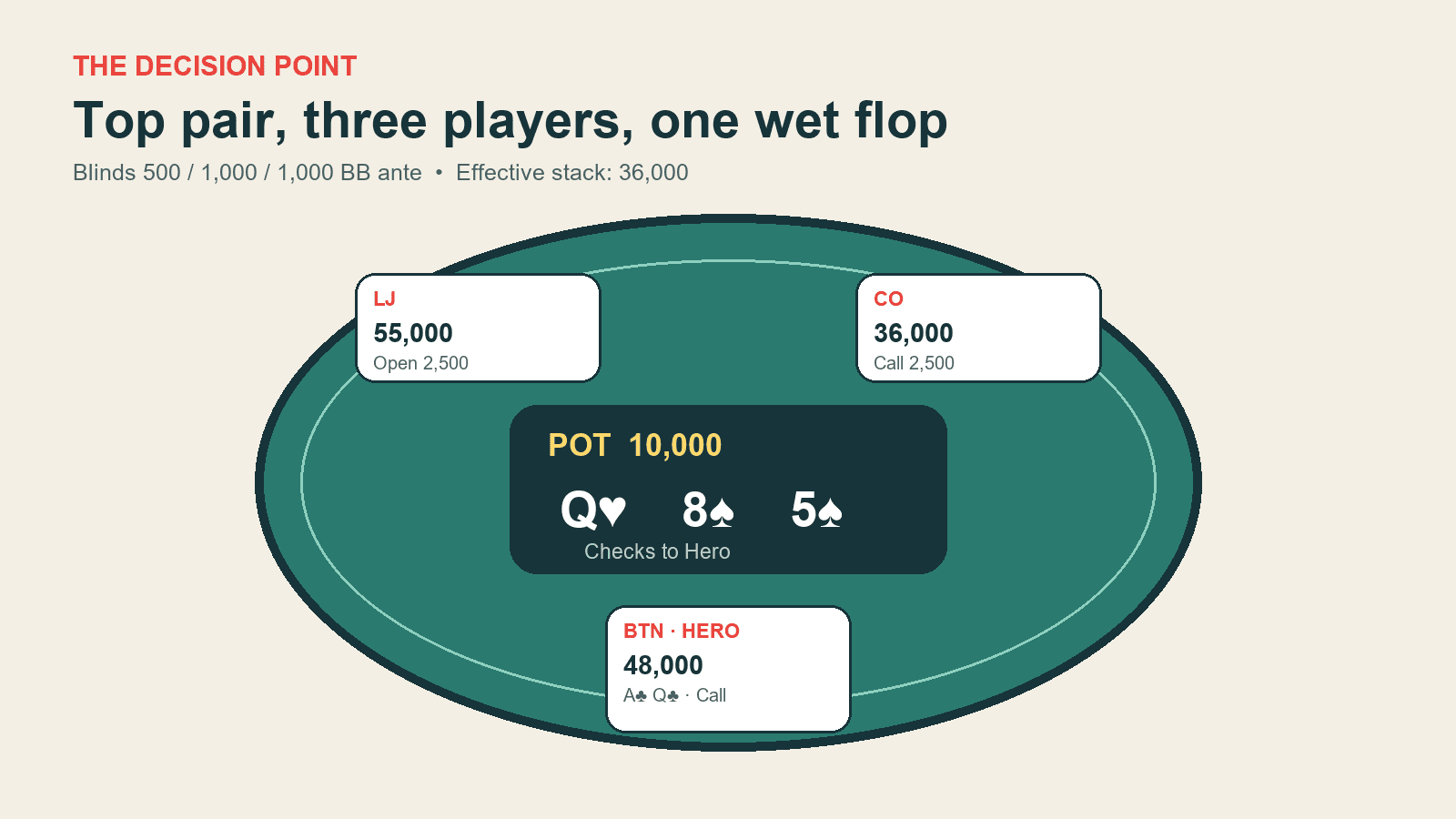
Blinds are 500/1,000 with a 1,000 big-blind ante.
- LJ starts with 55,000 and opens to 2,500.
- CO starts with 36,000 and calls.
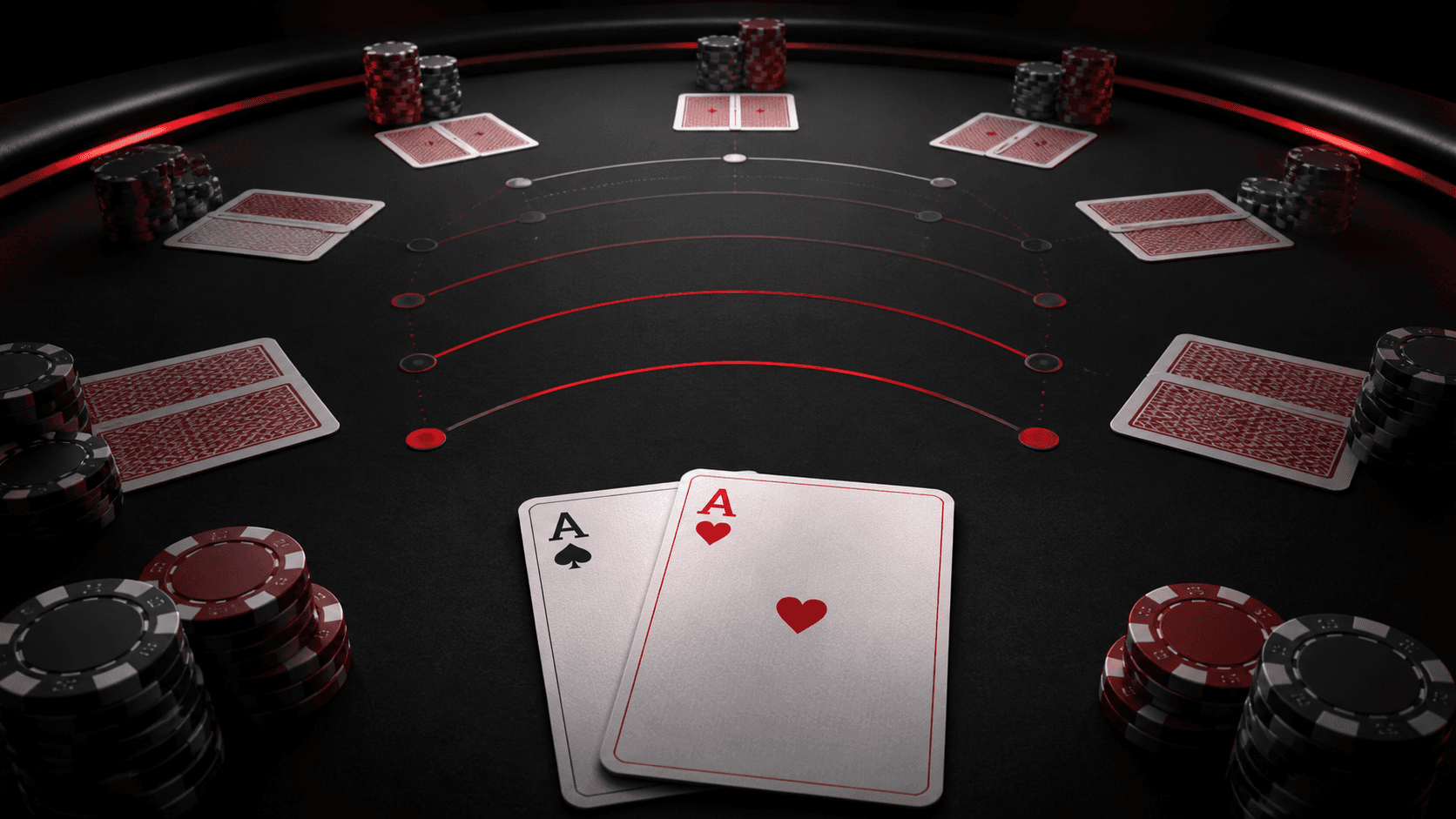
- Hero has 48,000 on the button and calls with A♣ Q♣.
- Both blinds fold.
The pot is 10,000: 1,500 in blinds, 1,000 in ante and 7,500 from the three players.
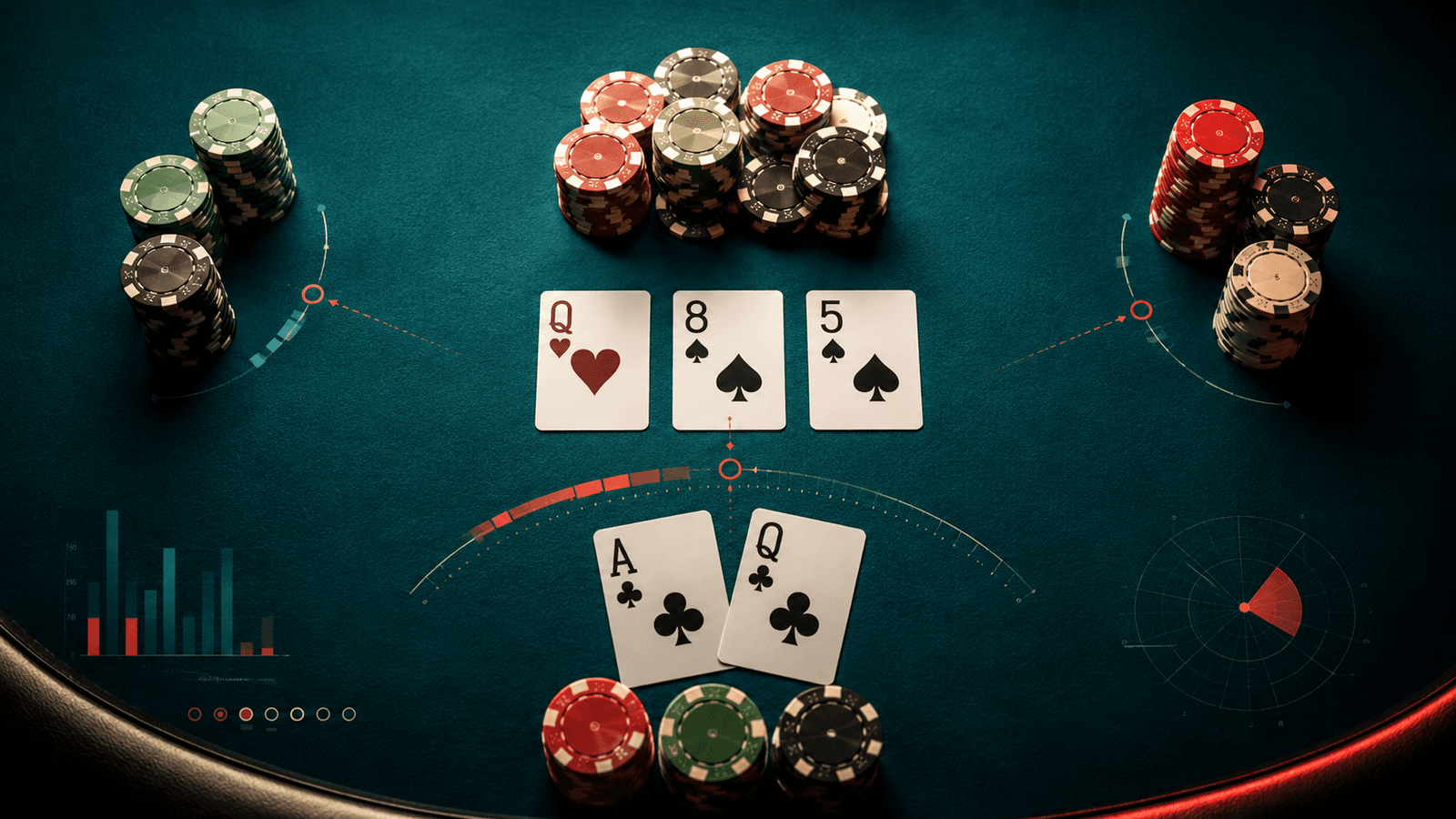
The flop is Q♥ 8♠ 5♠. LJ checks. CO checks. Action is on Hero with top pair, top kicker.
Start with the effective stack, not Hero's stack
Hero has 45,500 behind after calling preflop, but the CO has only 33,500. That smaller stack controls how much money can actually go into a heads-up pot between Hero and the CO.
The flop SPR is therefore:
33,500 ÷ 10,000 = 3.35
An SPR of 3.35 is not automatically low enough to stack off with one pair. It is low enough that one oversized bet can make the next street awkward.
Why multiway changes the value of A-Q
A-Q is still likely to be the best hand, but two ranges reached the flop.
The LJ can retain overpairs, sets, strong queens and high spade combinations. The CO can hold medium pairs, suited queens, 8-5 suited, sets, suited connectors and many spade draws. These are illustrative live-tournament ranges, not a claim about one exact opponent.
Multiway pots create three practical changes:
- Someone is more likely to have connected strongly.
- A bet must get through or be called by two ranges, not one.
- Calls tend to be stronger, so three streets of thin value become less attractive.
Hero should still bet often after both players check, but “top pair, top kicker” is not a reason to choose the largest size.
Option 1: Check back
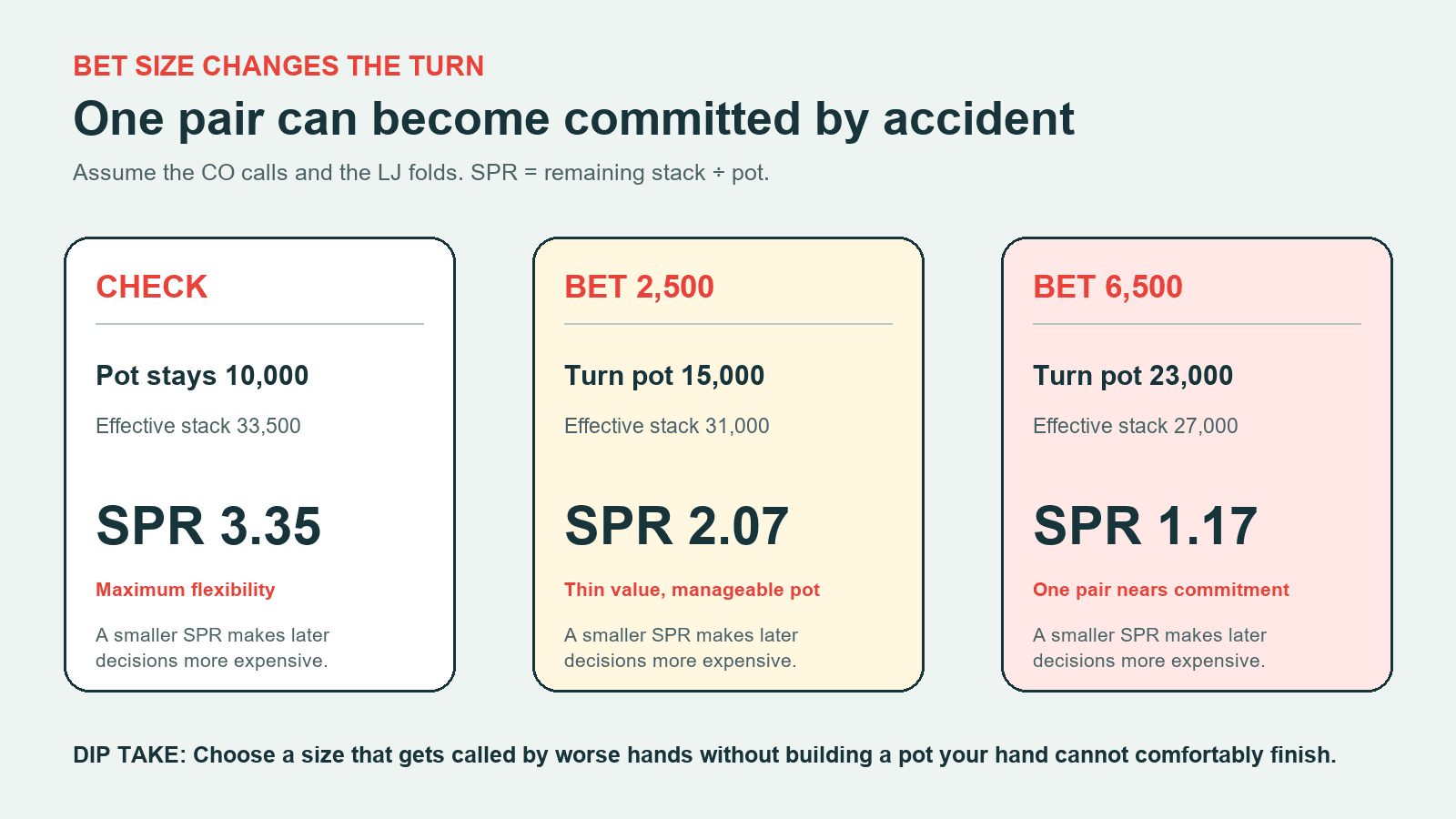
Checking keeps the pot at 10,000 and the effective stack at 33,500, an SPR of 3.35.
Advantages:
- Protects the checking range.
- Avoids a check-raise on a board with sets, two pair and strong draws.
- Keeps worse queens and medium pairs in the hand.
- Preserves room to call or value-bet later.
Costs:
- Gives free equity to spades, straight draws and weaker pairs.
- Misses immediate value from Q-J, Q-10, 8-x and draws.
- Makes it harder to deny equity when two players share many live cards.
Check is defensible against aggressive opponents who attack delayed lines. It should not be the only plan.
Option 2: Bet 2,500—25% of the pot
Suppose Hero bets 2,500, the LJ folds and the CO calls.
The turn pot becomes 15,000. The CO has 31,000 behind, so the new SPR is:
31,000 ÷ 15,000 = 2.07
This size can be called by worse queens, eights, pocket pairs and draws. It charges two opponents without forcing Hero to represent only very strong hands.
The small bet also gives Hero a better price on a value attempt. It needs to work as a bluff only 20% of the time to show an immediate profit: 2,500 ÷ 12,500. Hero is not bluffing here, but the number explains why a quarter-pot range bet can pressure weak holdings efficiently.
Option 3: Bet 6,500—65% of the pot
If the CO calls and the LJ folds, the turn pot becomes 23,000. The CO has 27,000 behind, producing an SPR of only:
27,000 ÷ 23,000 = 1.17
That looks powerful, but it creates two problems.
First, many hands Hero wants value from can fold. Second, the hands that continue are weighted toward strong queens, sets, two pair and robust draws. Hero has built a nearly stack-sized turn pot against the strongest part of the calling range.
The turn test
Take the small-bet line. The LJ folds, the CO calls and the turn is 7♠, completing the front-door flush. The pot is 15,000. The CO leads 6,000.
Hero must call 6,000 to contest a final pot of 27,000, so the direct pot-odds threshold is:
6,000 ÷ 27,000 = 22.2%
That does not mean Hero should automatically call. A-Q has no spade. Against a tight range of made flushes, sets and two pair, its equity can be poor. Against an opponent who leads one-spade hands, pair-plus-draws and occasional bluffs, calling once becomes more reasonable.
The key questions are:
- Does this player lead completed draws for a small size?
- Do they bluff when the obvious draw arrives?
- Can they value-bet a worse queen?
- Will Hero face a large river bet on most cards?
Against a straightforward live player, folding can be correct despite attractive pot odds. Against a capable player with enough semi-bluffs and blocker bets, call and reassess the river. Raising usually isolates Hero against better hands and folds out the bluffs.
A practical default
On this flop, DIP prefers the 2,500 bet as the default.
It earns value and protection while leaving room to respond when the board changes. Check is a useful secondary line. The 6,500 bet should be reserved for specific opponents who call too widely or for a strategy built around polarized ranges—not used simply because top pair feels strong.
Common mistakes
- Looking at Hero's 45,500 instead of the 33,500 effective stack.
- Betting large to “protect” without asking which worse hands will call.
- Treating a multiway call like a heads-up call.
- Using pot odds without estimating the opponent's betting range.
- Deciding to stack off on the flop before seeing how the turn changes the board.
- Ignoring how one bet size changes every later decision.
DIP's view
Good live poker is often less about finding a dramatic move and more about keeping weaker hands involved without giving stronger hands an easy path to your stack. With top pair in a multiway pot, choose a size that can be called by worse and still lets you make a disciplined fold later.
Responsible play: Tournament poker involves financial risk and high variance. Set a fixed entertainment budget before entering, never chase losses and do not use money needed for living expenses.