Second pair can win a showdown without being strong enough to build a large pot. When you bet mainly because you dislike giving a free card, pause: which worse hands will call, which better hands will fold, and what will a raise do to your plan?
One hand and two possible flop choices
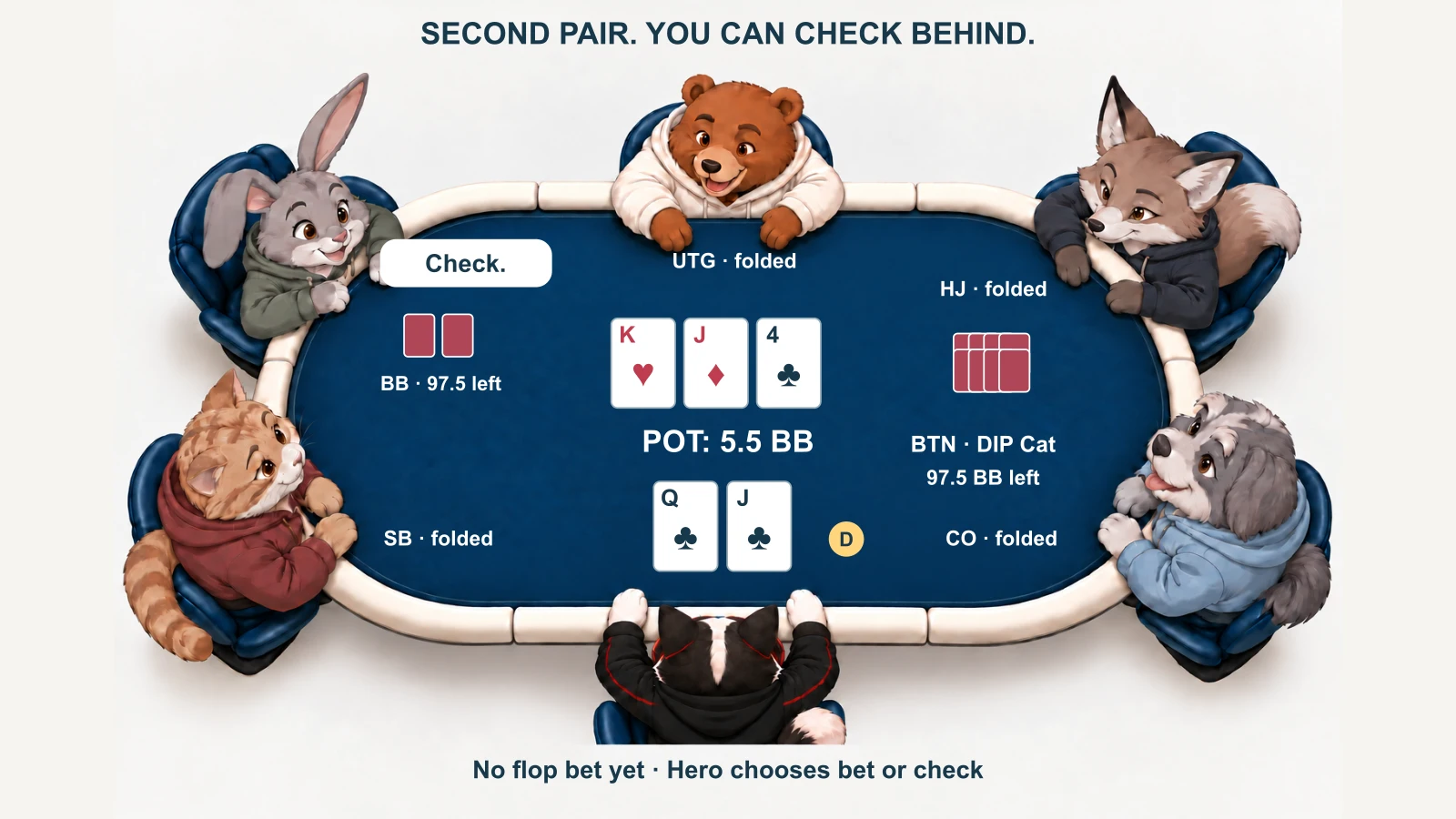
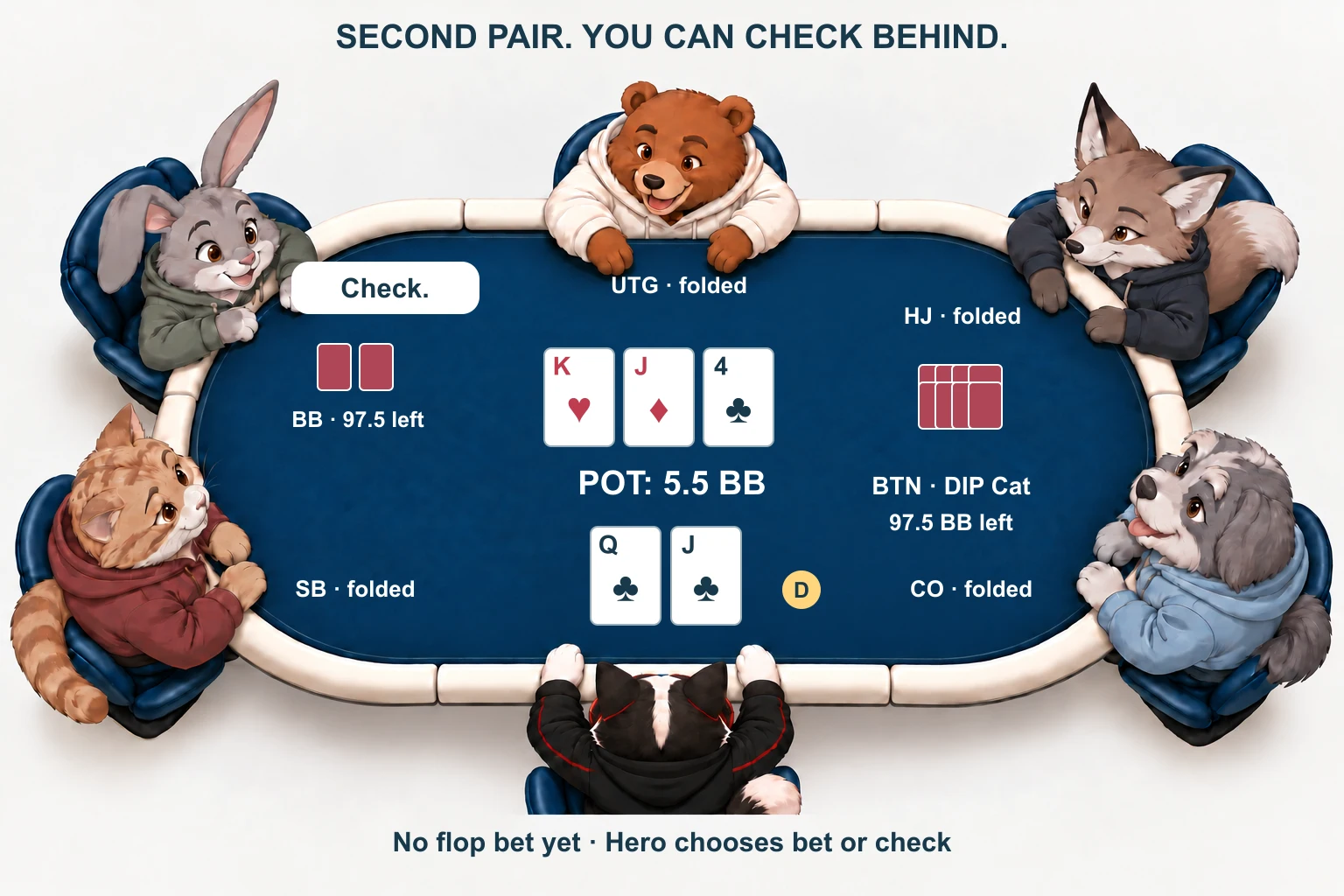
Consider a hypothetical six-handed cash game, 100 BB effective, with no ante or rake. Everyone folds to DIP Cat on the button. Hero raises to 2.5 BB with Q♣ J♣, SB folds its 0.5 BB and Rabbit calls from BB. The pot is 5.5 BB, and both active players have 97.5 BB behind.
The flop is K♥ J♦ 4♣. BB checks. No flop bet is outstanding. Hero has second pair, a queen kicker and a backdoor club draw: it would take clubs on both remaining streets to make a flush.
This is a good candidate for a check-back, not a command to check every jack. We assume BB can continue with kings, jacks, pocket pairs and straight draws, and is capable of bluffing later. These are illustrative range categories, not solver output or measured frequencies.
What a protection bet actually buys
A 2 BB bet may fold hands with a chance to improve, and may collect calls from weaker jacks or some pocket pairs. Against someone who calls too loosely, those worse calls can justify betting. Checking gives those hands a free turn and may miss value.
But better kings do not usually disappear simply because you bet small. You may also remove weak hands that could bluff later, while keeping the stronger part of BB's range. If raised, QJ is uncomfortable: the pot grows without your hand becoming stronger. Protection is a benefit of a bet, not proof that the bet earns more than checking.
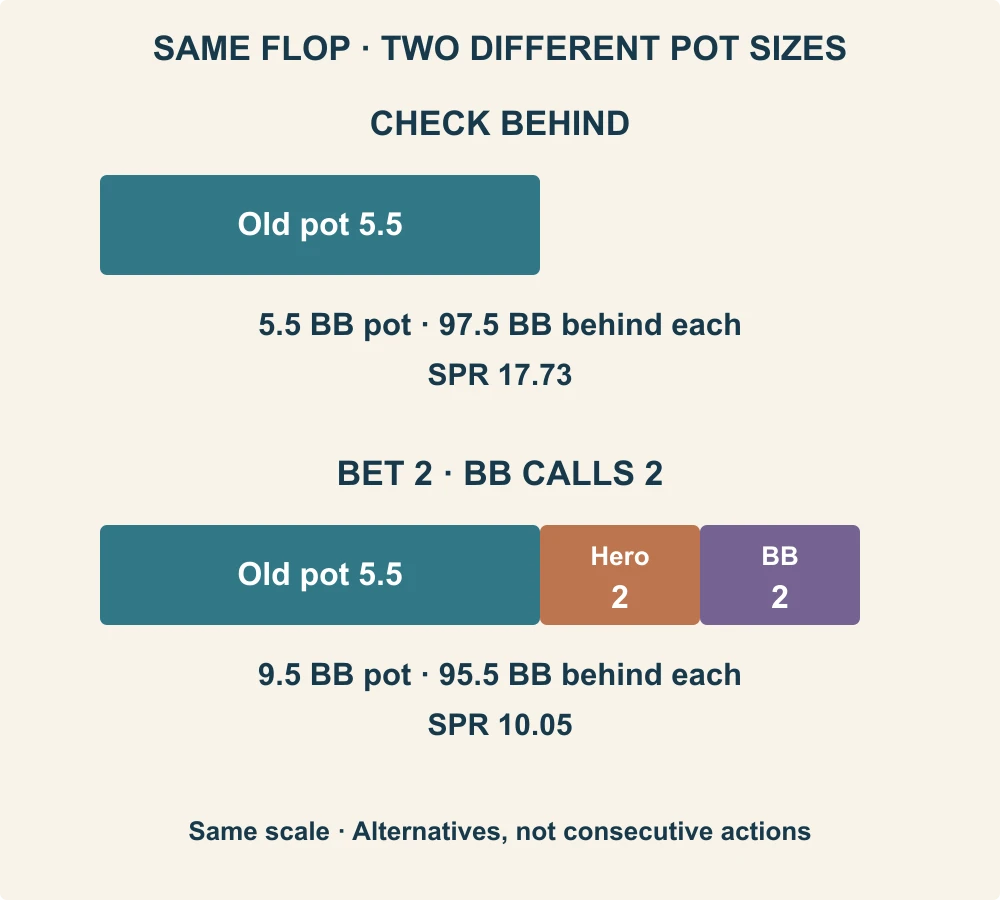
Compare two branches. Checking behind keeps the pot at 5.5 BB and both stacks at 97.5, for a stack-to-pot ratio of 17.73. Betting 2 and getting called creates a 9.5 BB pot with 95.5 behind each, an SPR of 10.05. Neither ratio gives a stack-off instruction. The comparison shows how an apparently small bet changes the size of later decisions.
Checking needs a turn plan
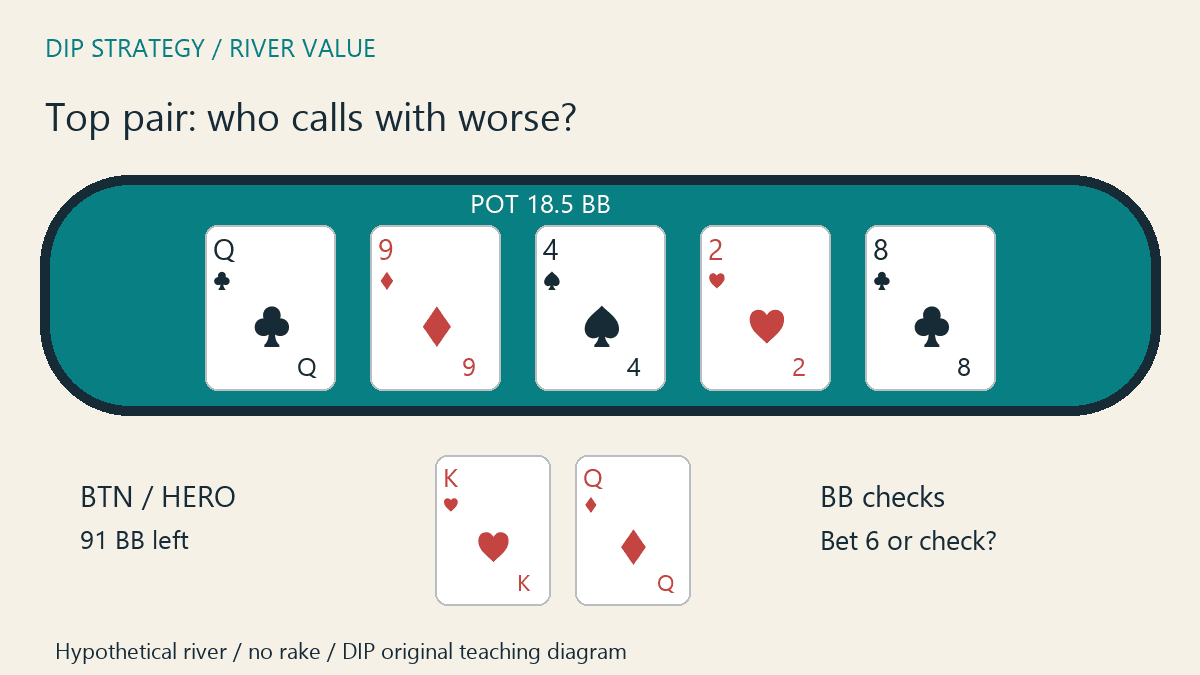
Take the check-back branch. The turn is 2♠, so the board is K♥ J♦ 4♣ 2♠. BB now bets 4 BB into 5.5. The pot including that bet is 9.5 BB. Hero faces 4 BB to call, which would make the pot 13.5 BB. After a call, both players would have 93.5 BB left.
The simple showdown price is 4 / 13.5 = 29.6%. It is a useful baseline, but this is not an all-in. You may face another river bet, so comparing a rough equity estimate with 29.6% does not by itself prove a profitable call.
BB can bet kings and sets, but may also bet missed hands and draws after seeing you check. For example, QT has an open-ended straight draw on this board. Hero's queen removes some QT combinations: three queens remain and four tens remain, leaving 12 possible QT combinations before restricting them to a realistic preflop and betting range. That is not evidence that all 12 are bluffs. It is a reminder that your cards affect the opponent's possible hands, including hands you hope are bluffing.
Calling keeps those bluffs in and avoids turning your showdown hand into a raise that mostly gets action from better hands. Folding becomes more attractive against a player whose large turn bets are reliably value-heavy. A raise needs its own reason, such as a credible set of better hands that would fold; “I want to know where I am” is not one.
Do not prepay for the river
Suppose you call and the river is 7♦. If BB checks, checking behind takes the showdown without asking worse hands to pay another bet. A thin value bet would need evidence that those worse hands really call.
If BB bets 10 into 13.5 instead, you face a separate decision: calling 10 would make 33.5, for a 29.9% showdown threshold. You do not owe that call because you called the turn. Reassess which value hands take both bets, which draws missed and which of those missed hands actually bluff. A nine or ace river would complete QT's straight; do not reuse the blank-river reasoning on every card.
DIP conclusion
Our default in this illustrative spot is to consider checking second pair, then respond to the actual turn card, size and opponent. Bet when worse calls and useful equity denial justify it. Check when a modest showdown hand benefits more from keeping the pot manageable and the opponent's weak hands in play. Neither “always protect” nor “check means give up” is a sound plan.
Practice with play chips. If playing for money, set an affordable limit before starting and never chase losses.