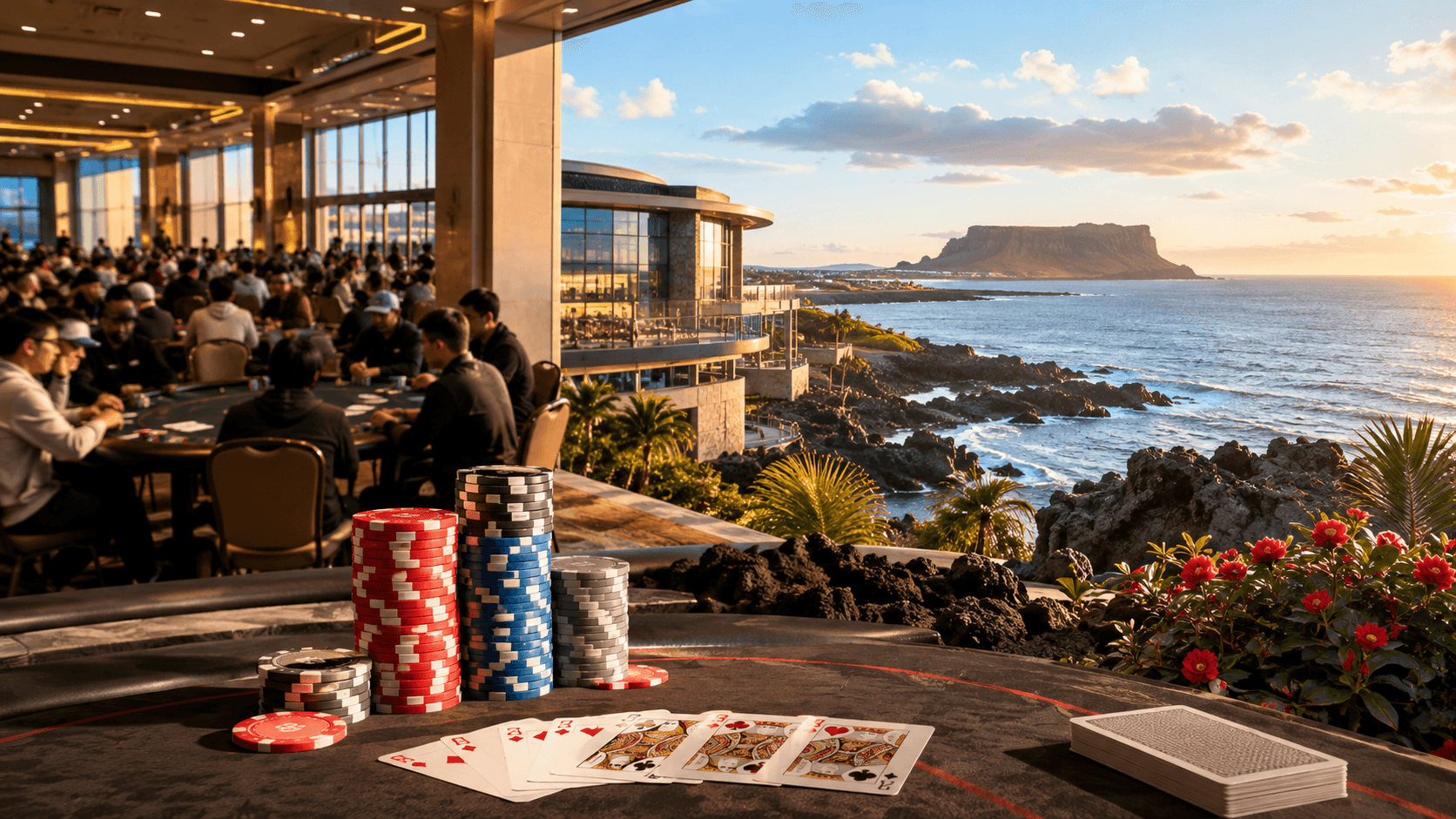
The Asian Poker Tour has released the full schedule for APT Jeju 2026—and the scale changes how players should plan the trip. The festival now runs for 13 days, from September 25 to October 7, at LES A Casino inside Jeju Shinhwa World in South Korea.
The official schedule lists 136 trophy events, three satellites and more than KRW 5.2 billion in guaranteed prize pools. That sounds like unlimited choice. In practice, the most important decision is not which event looks biggest. It is how to build a schedule that matches your bankroll, preferred format and ability to recover between long tournament days.
What changed
APT says the festival has added three days and is 32% larger than its previous Jeju offering. The 136 tournaments include 90 No-Limit Hold’em events and 46 non-NLH events.
The non-NLH schedule is unusually deep for an Asian festival:
- 21 Omaha tournaments
- 17 stud and mixed-game tournaments
- Eight draw-game tournaments
- Two heads-up events
- Go-and-poker and chess-and-poker crossover events
- 11 dedicated women’s events across the wider schedule
For mixed-game players, this is not simply a Main Event festival with a few side events attached. It is a broad schedule where specialists can build an entire trip without playing only hold’em.
The Main Event anchor
The KRW 2.7 million APT Main Event runs from September 27 to October 3 and carries a KRW 2.2 billion guarantee.
That makes it the natural anchor for many travelling players, but it should not automatically become the first event on the itinerary. A player arriving in Jeju immediately before a long Day 1 may be dealing with travel fatigue, unfamiliar food, currency exchange and registration logistics.
A more practical plan is to arrive with enough time to sleep properly, verify the current schedule and play only a warm-up that fits the trip budget. The warm-up should prepare you for the Main Event, not consume the money reserved for it.
Entry points below the Main Event
The schedule contains several lower-cost routes into the festival. Official buy-ins include:
- KRW 450,000 Micro Main Event on October 7
- KRW 600,000 Sunday Super Stack on September 27
- KRW 750,000 Monster Stack
- KRW 900,000 Korea National Cup
- KRW 1.2 million Mystery Bounty Hunter
- KRW 1.2 million Ultra Stack
- KRW 1.5 million Mini Main Event
- KRW 1.5 million Baby Zodiac Classic
The organizer’s USD figures are reference conversions only. A Philippine player should budget in the currency actually being spent: Korean won for entries and local expenses, plus pesos for the total amount leaving the bankroll.
Exchange-rate movement, card conversion fees and ATM charges can turn a seemingly small difference into another side-event buy-in over a long trip.
High rollers are a separate bankroll decision
The same festival also includes events from KRW 3 million up to KRW 37 million. Their presence makes the schedule look glamorous, but they should be treated as a different bankroll category.
A satellite win or one early cash does not automatically make a high roller affordable. Tournament variance remains high, and the travel budget must still cover accommodation, food, transport and the return journey.
A good schedule survives the worst reasonable outcome: no cashes.
A three-step way to build the trip
First, choose one anchor tournament. For many players that will be the Main Event, National Cup or Mini Main Event.
Second, reserve the full non-poker travel budget before choosing side events. Flights, hotel nights, ground transport, food, insurance and an emergency buffer are not part of the tournament bankroll.
Third, add side events only from the money left after the anchor and travel costs are protected. Avoid scheduling every day. A rest day can be worth more than entering another event while tired.
Format matters as much as buy-in
A 136-event schedule encourages comparison by price, but structure and format may matter more.
- Mystery bounties can create large swings before the payout stage
- Turbo and short-clock events reduce postflop decision time
- Deep or ultra-stack events demand more hours and patience
- Omaha and mixed games punish players who are still learning basic rules
- Satellites reward survival and seat value, not ordinary chip-EV aggression near the bubble
Players should read the current official structure sheet for each event before registering. A familiar buy-in does not guarantee a familiar tournament.
What Philippine players should verify
Before booking or buying in, confirm:
- The latest event date and start time
- Buy-in currency and any fees
- Registration and late-registration rules
- Re-entry limits
- Venue entry and identification requirements
- Current travel and immigration requirements
- Hotel cancellation terms
- Whether the event structure fits your experience
Schedules can change. The official organizer page and venue information should be checked again close to departure.
DIP’s view
APT Jeju 2026 is interesting because its scale creates real choice rather than only bigger headline numbers. The lower buy-in events, mixed-game depth and long festival window allow players to build very different trips around one venue.
The risk is over-scheduling. Seeing 136 events can make every empty day feel like a missed opportunity. DIP’s preferred approach is one anchor event, a protected travel budget, one or two carefully selected side events and at least one recovery day.
That plan may look less exciting on paper. It is more likely to produce good decisions at the table.
Information verified September 4, 2026. Tournament details may change; confirm the current official schedule before travel or registration.
Poker involves financial risk. Set a total trip limit before booking, use money you can afford to lose, and never chase tournament losses by adding events outside the plan.